Shabbat Va’eira 5774
27 Dec 2013 / 24 Tevet 5774
Partnering With G-d
Exodus. 6:2 - 9:34 Parashat Va’eira
As the secular year 2013 comes to a close, friends both Jewish and not, have commented about taking up and making New Years Resolutions. Sp far I’ve heard about losing wight, getting to the gym more, listening to the doctor, actually going to the doctor, reading that book that’s been put off, and countless others. While these “resolutions” may be real, and

One need only even open a siddur to see the sources of Jewish texts and prayers which remind us of values and goals we hope to embody. In the morning liturgy we read: אלו דברים שאין לחם שעיר Eilu d’varim sh’ein l’chem shiur: And these are the things that are without end... Honoring one’s father and mother, וגמילות חסדים ug’milut chasadim and engaging in deeds of compassion and lovingkindness... Visiting the sick...” (Mishkan T’filah for Travelers p 66). The Torah proclaims: צדק צדק, תרדף tzedek tzedek, tirdof: Justice Justice, you shall pursue!” (Deut. 16:20). Later the book of Deuteronomy reminds us to not oppress the widow, the fatherless orphan, and to be kind to the stranger in our midst. In fact, these principles are repeated over 50 times in the Hebrew Bible.
The Rabbis and the Torah itself proclaim: “Do not oppress a stranger; you know the feelings of the stranger, for you were strangers in the land of Egypt” (Exodus 23:9). It is this point of our history and our future in which we find our parsha, “Vayeira.” The Israelites had been enslaved in the land of Egypt by Pharaoh,
וַיָּקָם מֶלֶךְ-חָדָשׁ, עַל-מִצְרָיִם, אֲשֶׁר לֹא-יָדַע, אֶת-יוֹסֵף.
V’kayam malach chadash, al mitzrayim, asher lo-yadah et Yosef.
And now there was a new king of Egypt, who did not know Joseph (Ex. 1:8).
We retell this story twice annually: the first during the Torah reading cycle, and the second at the Passover Seder where we recall our redemption. To recap, we are told of Pharaoh’s fears of the Israelites overthrowing him, and thus orders the execution of all newborn

Our parsha begins after Moses’ first trip to speak with Pharaoh ends poorly. Shemot, the parsha from last week closes with the ominous declaration by G-d:
וַיֹּאמֶר יְהוָה, אֶל-מֹשֶׁה, עַתָּה תִרְאֶה, אֲשֶׁר אֶעֱשֶׂה לְפַרְעֹה: כִּי בְיָד חֲזָקָה, יְשַׁלְּחֵם, וּבְיָד חֲזָקָה, יְגָרְשֵׁם מֵאַרְצו.
And Adonai said unto Moses: 'Now shalt thou see what I will do to Pharaoh; for by a strong hand shall he let them go, and by a strong hand shall he drive them out of his land.'ֹ (Ex. 6:1)
Va’eira continues the Exodus redemption story with the beginning of Aaron and Moses’ relationship as leaders of בני ישראל b’nei Yisrael, the Children of Israel. The first two sets of three plagues are wrought upon Egypt and Pharaoh initially responds to these Devine acts and says he will set the Israelites free, however when the plague is rescinded by Moses’ intervention to G-d, Pharaoh’s heart is “hardened” and the Israelites remain enslaved and not freed מבית עבדים mi-beit avadim from the house of bondage.
This parsha has a lot to be reminded of as 2013 comes to an end. What is interesting to note, is that at the end of the parsha, G-d makes a statement that Moses will see what “I will do to Pharaoh...” suggesting that G-d is an omnipotent, powerful G-d. So this begs the question, why then, enlist the help of Moshe? If G-d can do this on His own, why get Moses involved? And for that matter Aaron. It is clear the G-d in this story is a powerful Devine being that cannot be simply understood (as implied by the different names ascribed to G-d in this and surrounding parashiyot). It is also clear that G-d can interact with humans on a level that would make one curious as to why G-d does not reveal Himself to Pharaoh. Why go through a spokesman?
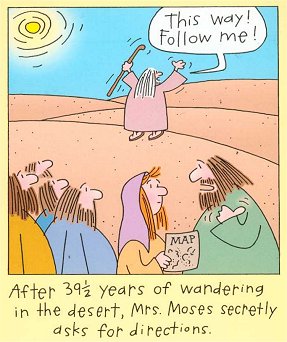
Even more curious is Moshe Rabbeinu’s reaction to this Devine decision. Have you ever experienced that awkward moment when you find out you have been volunteered for something and saying to yourself “why me?” I’m sure you all can chuckle and recall that situation. Here is the Shechinah, Creator of the heavens and earth, saying to Moses: “I’ve heard my peoples cry, I’m going to need you to get a staff, grow a beard maybe, and be my spokesman and do my bidding. I’ll be with you, though.” Now, don’t get me wrong, I’m not saying this is bad, but I can only imagine the thoughts going through Moses’ mind: “What mishegas have I gotten myself into?!” The text even points out Moses’ repeated rejections. As many may know or not, Moses was afflicted with a speech impediment, and in our parsha, he brings this up as to say: “Why ask me, when I can’t speak perfectly?” It is after Moses’ fears that G-d then adds the Vice-President and Public Relations Officer Aaron, Moses’ brother to the “G-d squad” in this case.
These two questions speak to me personally as a very important value in Judaism. In looking at this portion, the Rabbinic Scholar Nachum Sarna entitles this section “A Call To Action” (The JPS Commentary, Sefer Shemot, Sarna). This call to Moses and Aaron to become new leaders of the broken, disparaged, spiritless Israelites. These are a people whom their history is known to them but not experienced first hand. This is perhaps why our parsha is entitled Va’eira and G-d appeared. The Israelites perhaps need to see the power of the G-d of their fathers and mothers in the manifestations of the plague to see how awesome and strong His outstretched arm is. The texts goes so far to say:
וַיְדַבֵּר מֹשֶׁה כֵּן, אֶל-בְּנֵי יִשְׂרָאֵל; וְלֹא שָׁמְעוּ, אֶל-מֹשֶׁה, מִקֹּצֶר רוּחַ, וּמֵעֲבֹדָה קָשָׁה.
And Moses spoke so unto the children of Israel; but they hearkened not unto Moses for their ru-ach- their spirits crushed, and by the cruel bondage.
I would probably not find any one to disagree with the statement that our people, עם ישראל am Yisrael the people of Israel have known suffering. The atrocities of the Holocaust, the Inquisition, the wars, battles, exiles, and pain and suffering the Jewish people have faced over centuries is immeasurable. And yet, it is not out of Jewish guilt that these things are remembered. In the coming weeks we will read: “Do not oppress a stranger; you know the feelings of the stranger, for you were strangers in the land of Egypt” (Exodus 23:9) We recall lest we not forget. We are a people, that our prayerbook states “in whom the past endures, in whom the present is inconceivable without moments gone by. The Exodus lasted a moment, a moment enduring forever.” (MT Travelers Ed p 143).
As we look at our past, we can determine who we wish to become in the future. What we experience and learn, feel and believe, all these impact who we are. Even more so, they help us chart a path to who we become. As Jews, we are שעשני בצלם אלהים she-asani b’tzelem Elohim, created in G-d’s image. We all have a responsibility to one another, to G-d and to ourselves to work to make the world we live in a better place. It is an awesome responsibility. We must all be a Moses in our own right: to stand up, even if it is not easy.
In this past month, I had the opportunity to be a part of the worldwide Reform Jewish community at the URJ’s Biennial convention in San Diego. After hours upon hours of classes and seminars, a community of clergy, board members, lay leaders, educators, NFTY kids and many more all came together: five thousand strong, to welcome Shabbat. To recall
our history and past and to plot a course for the future. I have always been proud to be a Reform Jew. As someone who loves the North American Federation of Temple Youth, as a lay leader in the Jewish community, as a singer and as a Jew, it was truly awakening to be a part of such a large community and realize that our voices do count. What we practice, how we practice, the social action projects, the youth group events, the songleading training... Reform Judaism is here to make a difference. Jews, עם ישראל am Yisrael the people of Israel have known what it’s been to feel pain and despair. We’ve experienced loss. We’ve felt violated. We’ve lived through violence.
 |
| Songleading at the Biennial |
WE ARE AM YISRAEL.
The Rabbis in the Talmud write that “if one person saves a life, it is as if they saved the entire world, however if one takes a life, it is as if he destroyed a world” (Babylonian Talmud, Tractate Sanhedrin 37a). We were that stranger. We were the oppressed one. Yet we have a voice. As we spend the next few days thinking of where this next year will take us, I urge and encourage you to take a stand for what you believe in. Whether you find a voice to speak for victims of gun violence, against war, as a patient advocate, or an animal rescue organization. There are countless ways to make this year, 2014, a better one.
I can’t help but remember something my mother taught me growing up, and reminded me of at my Bar Mitzvah years ago. She said: “Always leave some behind... What you leave behind is what others will remember you by, whether it is material things, or emotional support for a person or any living thing that may need help.” As Rabbi Tarfon wrote in Pirkei Avot: “It is not required of you to complete the task. But neither are you free to desist from it completely” (Avot 2:15). Moses worked as G-d’s partner, and sometimes not always a willing partner. Moses worked to ensure our peoples deliverance from slavery. Moses was uneasy. He was afraid. But he did what was necessary. He stood firm, and our people lived. We lived.
As you spend this next year, I wish you health.
I wish you blessing and well being.
I wish you hope.
I’d like to close with a prayer for Social Action, that perhaps you will find your voice and help someone else make the journey through the sea, to come out the other side strong.
May God bless you with discomfort
At easy answers, half-truths, and superficial relationships
At easy answers, half-truths, and superficial relationships
So that you may live deep within your heart.
May God bless you with anger
At injustice, oppression and exploitation of people,
So that you may work for justice, freedom and peace.
May God bless you with tears
To shed for those who suffer pain, rejection, starvation and war
So that you may reach out your hand to comfort them
And to turn their pain into joy.
And may God bless you with enough foolishness
To believe that you can make a difference in the world,
So that you can do what others claim cannot be done.
Amen.
May God bless you with anger
At injustice, oppression and exploitation of people,
So that you may work for justice, freedom and peace.
May God bless you with tears
To shed for those who suffer pain, rejection, starvation and war
So that you may reach out your hand to comfort them
And to turn their pain into joy.
And may God bless you with enough foolishness
To believe that you can make a difference in the world,
So that you can do what others claim cannot be done.
Amen.
-Franciscan Benediction
Have a Happy and Healthy New Year, and Shabbat Shalom.
Sources:
"A Hebrew - English Bible." Hebrew English Bible. Jewish Publication Society Tanakh (1917 Version), 2005. Web. 10 Dec. 2013. <http://www.mechon-mamre.org/p/pt/pt0.htm>
Marcus, Yosef. [Pirḳe Avot] = Pirkei Avot = Ethics of the Fathers : With a New Commentary Anthologized from the Works of the Classic Commentators and the Chasidic Masters. Brooklyn, NY: Merkos L'inyonei Chinuch, 2005. Print.
"Religious Action Center - Closing Prayers." Religious Action Center - Closing Prayers. N.p., n.d. Web. 10 Dec. 2013. <http://rac.org/social/worship/closing/>.
Sarna, Nahum M. Exodus = [Shemot] : The Traditional Hebrew Text with the New JPS Translation. Philadelphia: Jewish Publication Society, 1991. Print.
Wasserman, Sue Ann. [Mishkan Tefilah Le-nosʻim] = Mishkan T'filah for Travelers : A Reform Siddur. New York: Central Conference of American Rabbis, 2009. N. pag. Print.
Pictures (in order):
http://www.techblogstop.com/wp-content/uploads/2013/12/Beautiful-Happy-New-Year-2014-HD-Wallpapers-by-techblogstop-10.jpg
http://taliassteakhouse.com/wp-content/uploads/2013/01/155.jpg
Personal, Sean Samitt